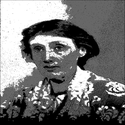
Virginia Woolf
Full Name and Common Aliases
Adeline Virginia Woolf, commonly known as Virginia Woolf, was a pioneering figure in the world of literature. Her name is synonymous with modernist writing, and she is often referred to simply as "Virginia Woolf" in literary circles.
Birth and Death Dates
Virginia Woolf was born on January 25, 1882, and she passed away on March 28, 1941. Her life spanned a period of significant social and cultural change, which deeply influenced her work.
Nationality and Profession(s)
Virginia Woolf was British, and she was a renowned novelist, essayist, and critic. Her contributions to literature and feminist thought have cemented her status as one of the most important literary figures of the 20th century.
Early Life and Background
Virginia Woolf was born into an intellectually vibrant household in London, England. Her father, Sir Leslie Stephen, was a notable historian and author, while her mother, Julia Prinsep Stephen, was a model and philanthropist. This environment fostered Virginia's early love for literature and writing. However, her childhood was also marked by personal tragedies, including the deaths of her mother and half-sister, which led to her first experiences with mental health struggles.
Educated at home by her parents, Virginia had access to her father's extensive library, which became a sanctuary for her intellectual development. The Stephens' home was a hub for the literary elite of the time, exposing Virginia to influential thinkers and writers from a young age.
Major Accomplishments
Virginia Woolf's major accomplishments lie in her innovative approach to narrative structure and her exploration of the inner lives of her characters. She was a central figure in the Bloomsbury Group, a collective of writers, intellectuals, and artists who were known for their progressive ideas and avant-garde approaches to art and literature.
Woolf's work is celebrated for its pioneering use of stream of consciousness as a narrative device, which allowed her to delve deeply into the psychological landscapes of her characters. This technique was revolutionary and set a new standard for modernist literature.
Notable Works or Actions
Among Virginia Woolf's most notable works are "Mrs. Dalloway" (1925), "To the Lighthouse" (1927), and "Orlando" (1928). Each of these novels showcases her mastery of narrative form and her ability to capture the complexities of human experience.
"Mrs. Dalloway" is renowned for its exploration of time and consciousness, while "To the Lighthouse" is celebrated for its profound insights into family dynamics and the passage of time. "Orlando" is a groundbreaking work that challenges traditional notions of gender and identity, reflecting Woolf's interest in feminist themes.
In addition to her novels, Woolf was a prolific essayist. Her collection "A Room of One's Own" (1929) is a seminal feminist text that argues for women's independence and the necessity of financial and intellectual freedom for female writers.
Impact and Legacy
Virginia Woolf's impact on literature and feminist thought is immeasurable. Her innovative narrative techniques and her exploration of the human psyche have influenced countless writers and continue to resonate with readers today. Woolf's work challenged the conventions of her time and opened new possibilities for narrative form and content.
Her legacy extends beyond her literary contributions; she is also remembered as a trailblazer for women's rights and gender equality. Woolf's advocacy for women's intellectual freedom and her critique of patriarchal structures have made her an enduring symbol of feminist thought.
Why They Are Widely Quoted or Remembered
Virginia Woolf is widely quoted and remembered for her profound insights into the human condition and her eloquent articulation of the struggles and triumphs of the individual spirit. Her writing captures the intricacies of thought and emotion with unparalleled depth and beauty, making her words timeless and universally relevant.
Woolf's exploration of themes such as identity, time, and the nature of reality continues to inspire and provoke thought. Her ability to articulate the complexities of life in a way that resonates with readers across generations is a testament to her genius.
In the realm of feminist literature, Woolf's voice remains a powerful force. Her advocacy for women's rights and her critique of societal norms have made her a beacon for those seeking to understand and challenge the status quo. Her quotes often reflect her deep understanding of the human experience and her commitment to social justice, ensuring her place as a revered and quoted figure in both literary and feminist circles.
Quotes by Virginia Woolf
Virginia Woolf's insights on:

I attain a different kind of beauty, achieve asymmetry by means of infinite discords, showing all the traces of the mind's passage through the world, achieve in the end some kind of whole made of shivering fragments.

Every secret of a writer's soul, every experience of his life, every quality of his mind, is written large in his works.


Lighthouses are endlessly suggestive signifiers of both human isolation and our ultimate connectedness to each other.


I can only note that the past is beautiful because one never realizes an emotion at the time. It expands later, and thus we don't have complete emotions about the present, only about the past.


I can only note that the past is beautiful because one never realizes an emotion at the time. It expands later, and thud we don't have complete emotions about the present, only about the past.